
Art Diary #1
All Fours and Rilke and The Odyssey and talismans, among other things in my art brain right now.

Quick note: Art Diary is a new thing and it’s something I want to do weekly. All my notes about my artistic life - what I’m reading, what I’m thinking about, what I’m watching, what’s influencing my art practice, what I’m inspired by. It’s the WORK part of a body of work.
The BODY part is coming next - Freak Zone: writing on embodiment, sensuality, eroticism - all the stuff that lives in my blood. This will be paywalled (not by much, but the slight barrier helps me feel a little more free) because it’s more vulnerable. Read this essay on sex I wrote for work if you want a little taste of what’s to come.
Art Diary.
what I’ve been reading:
listened to All Fours and I can’t even explain why it’s important. it would fall on deaf ears to friends who didn’t like it. takeaway: Miranda July’s writing in this novel reminds me that I can be bigger, creatively, when my impulse is to be smaller. permission to be huge.
it’s concerning that female desire is so offputting to so many. (not trying to say that the people who didn’t like it didn’t like it because of that.)
stories about nonmonogamy cheapen nonmonogamy? that’s my biggest criticism with All Fours. it’s not that I wish nonmonogamy wasn’t in the book, it’s that nonmonogamy is only ever a thing that can be experienced in practice. it just will never ever ever feel truthful in writing, even in retelling an experience to a friend. I’m not really pro or anti nonmonogamy, I have just experienced in varying degrees and somehow keep returning to it because I maybe have this karmic lesson I need to learn from it. I don’t know.
Okay rather than giving up and saying “I can’t even explain why it’s important” I’ll try to convey my thoughts on it by copy/pasting the transcript of the voice memo I sent to Cece about it directly after finishing:Hi. Not one minute ago did I finish all fours so I just wanted to send my raw unfiltered thoughts. I’m speechless like I felt like I was in conversation with her the entire time. the whole time I was listening. I was just like yes you feel it too. I feel this. And even though I’m not this woman, like this woman is so Of the head realm, like she’s surely an Aquarius, I mean I guess we’re both air signs and I definitely do feel airy and of the head realm a lot ,And I question like my whole existence on planet earth amongst other humans and feel I feel so alien from other people like all the time, But not in her specific way. I definitely don’t have her perverted fantasies, like no judgment, but you know I don’t have her kinks. But I think I feel that profound feeling of being other And desperately needing to make meaning out of that. And making every kind of meaning out of it even if it’s not real. And then also at the end of the book, her realizing aren’t we all experiencing this? Like she realizes she’s experiencing a universal truth that she had maybe at one point that was a very singular and personal truth to only her, And that’s her growth right? realizing That she is not alone in any of this. I’m gonna cry. what’s popping back into my head was when you said to me “maybe you’re the one being elusive” in regards to the [NAME REDACTED LOL] stuff. Like I’m over here so preoccupied with him being elusive when maybe it’s me. Maybe everyone is doing the thing they’re worried that the other person is doing. God, we’re all just the same even when we’re different. What a book oh my God, thank you for being the one who actually convinced me to read it. I will always be grateful. I love you.
(this has been slightly edited for clarity/privacy obviously)
to translate, I think the reason this book is important to me is because it’s about a woman who feels completely different from everyone she’s close to in her life. she meets someone who finally sees her, and she can’t be with him in the way she wants to be. he refuses to love her, but he sees her. and her growth arc throughout the book is that she realizes the things she’s feeling are maybe not so singular. she finally realizes the people in her life who she had previously felt alone with do have the capability of relating to her and making her feel less alone, once she gives them the chance. and these people do love her. she previously thought that the only way people could love her is by not fully seeing her, but that changes. as someone who so often feels alone in this world, who feels fundamentally unloveable, this was really powerful to see played out, even if the book was at times unnecessarily provocative (which I think is why most people are turned off by it). Also, it had some of the best sex writing I’ve ever read in my life.I’ve been reading a lot of reviews about Christopher Nolan’s The Odyssey because it is probably the best movie I’ve ever seen in my life (yeah, I said it) but this one, which is not really a review though it does give it 10/10, is the best. Quoting the end because it brought tears to my eyes:
Joseph Campbell devoted his life to studying mythology across cultures and showed that these stories endure because they speak to universal human experiences and truths. The Hero's Journey isn't Greek, Norse etc…it belongs to humanity. That's why we still tell these stories, from The Odyssey to Star Wars. Myths survive because they are kind of a living organism…they evolve, and because every generation finds itself reflected in them.
This reminds me that I led a salon about The Hero’s Journey during my writing retreat in Maine last year, teaching all my writer friends about this formula, and then having them apply it to the characters in their books. Here it is.A couple weeks ago I read Letters to a Young Poet by Rilke and these are all the lines I underlined:
Things are not all as graspable and sayable as on the whole they are led to believe; most events are unsayable, occur in a space that no word has ever penetrated.
Flee general subjects and take refuge in those offered by your own day-to-day life; depict your sadnesses and desires, passing thoughts and faith in some kind of beauty - depict all this with intense, quiet, humble sincerity and make use of whatever you find about you to express yourself, the images from your dreams and the things in your memory. If your everyday life seems to lack material, do not blame it; blame yourself, tell yourself that you are not poet enough to summon up its riches, for there is no lack for him who creates and no poor, trivial place.
To be an artist means: not to calculate and count; to grow and ripen like a tree which does not hurry the flow of its sap and stands at ease in the spring gales without fearing that no summer may follow. It will come. But it comes only to those who are patient, who are simply there in their vast, quiet tranquillity, as if eternity lay before them. It is a lesson I learn every day amid hardships I am thankful for: patience is all!
And indeed artistic experience lies so incredibly close to sexual experience, to its pains and pleasures, that both phenomena are really just different forms of one and the same desire and felicity.
Sex is difficult, true. But difficult things are what we were set to do, almost everything serious is difficult, and everything is unserious. If you only acknowledge this and manage from your own resources, from your own disposition and nature, from your own experience and childhood and strength, to win your way towards a relationship to sex that is wholly your own (not influenced by convention and custom), then you have no need to fear losing yourself and becoming unworthy of your best possession.
And that we receive this pleasure cannot be a bad thing; what is bad is the way almost all of us misuse the experience and waste it and apply it as a stimulus to the tired parts of our lives, as a distraction instead of as a concentration of ourselves into climactic points.
In one creative thought a thousand forgotten nights of love revive and lend it grandeur and height. And those who come together in the night-time and are entwined in a cradle of desire are carrying out a serious work in collecting sweetness, profundity and strength for the song of some poet yet to come, who will rise up to speak unutterable pleasures.
Believe in a love that is stored up for you like an inheritance, and trust that in this love there is strength and a benediction out of whose sphere you do not need to issue even if your journey is a long one.
Don’t you see how everything that happens is always a beginning again, and could it not be His beginning, given that beginnings are in themselves always so beautiful?
As the bees collect honey together, so we fetch the sweetness out of everything and build Him. We begin with the very slightest things, with what is barely noticeable (as long as it comes about through love), with out work and the repose that comes after, with a moment of silence or with a small solitary joy,
Love at first has nothing to do with unfolding, abandon and uniting with another person (for what would be the sense in a union of what is unrefined and unfinished, still second order?); for the individual it is a grand opportunity to mature, to become something in himself, to become a world, to become a world in himself for another’s sake; it is a great immoderate demand made upon the self, something that singles him out and summons him to vast designs.
But there young people so often and so badly go wrong: in that they (who by nature have no patience) fling themselves at one another when love comes over them, scatter themselves just as they are in all their troubledness, disorder, confusion… But what can come of that? What is life supposed to do with this heap of half-broken things that they call their togetherness and would like to call their happiness, were it possible, their future? Each person loses himself then for the other’s sake and loses the other and many more who were yet to come.
Women, in whom life abides and dwells more immediately, more fruitfully and more trustingly, are bound to have ripened more thoroughly, become more human human beings, than a man, who is all too light and has not been pulled down beneath the surface of life by the weight of a bodily fruit
The quieter, the more patient and open we are in our sadness, the deeper and more unerringly the new will penetrate into us, the better we shall acquire it, the more it will be our fate
You shouldn’t be dismayed if a sadness rises up in front of you, greater than any you have ever seen before; or if a disquiet plays over your hands and over all your doings like light and cloud-shadow. You must think that something is happening with you, that life has not forgotten you, that it holds you in its hand; it will not let you fall. Why should you want to exclude from your life all unsettling, all pain, all depression of spirit, when you don’t know what work it is that these states are performing within you?
the same desire that you might find enough patience in you to endure, and simplicity enough to have faith; that you might gain more and more trust in what is hard and in your own loneliness among other people. And otherwise let life take its course. Believe me: life is right, whatever happens.
And as to feelings: all feelings are pure that focus you and raise you up.
Everything that makes more of you than you have hitherto been in your best moments is right.
And your doubts can become a good quality if you school them… As soon as they begin to spoil something for you ask them why a thing is ugly, demand hard evidence, test them, and you will perhaps find them at a loss and short of an answer, or perhaps mutinous. But do not give in, request arguments, and act with this kind of attentiveness and consistency every single time, and the day will come when instead of being demolishers they will be among your best workers - perhaps the canniest of all those at work on the building of your life.
A couple weeks ago I also read I and Thou by Martin Buber and here’s what I underlined:
just from the intro:
religiosity as a form of faith is manifest first and foremost in the relationship of trust between individuals, a relationship on the basis of which the idea of God crystallizes as “the absolute object of human faith.”
One holds or positions oneself in the sacred I-Thou relation, without any intention other than being utterly present - attentive - to the presence of the other.
For Buber the Du-address (Thou) denotes reciprocal trust - a trust that is difficult to attain and sustain. It requires, as noted, risk, “a holy risk.” For the life of dialogue is fraught with mismeetings; one may open oneself to the other, removing the “armor” that one maintains to protect one’s inner-being, baring one’s vulnerabilities, only to be rebuffed or misunderstood by the other.
The “Between” of a shared lifeworld - instantiated in an I-Thou dialogue - engenders an intersubjective consciousness that binds each individual of the I-Thou meeting in a mutual existential claim on each other and sense of responsibility for each other. Thus, each of the partners in dialogue “become narratively involved in each other’s stories, borne by a ‘reciprocal interpenetration’ of life experiences, perspectives, fears, vulnerabilities, aspirations. Each has become a participating presence in the life of the other. Love is emblematic of the existential community created in the dialogical realm of the Between.
The intersubjective space of love, however, is not defined by feelings but rather enlarges one’s cognitive and ethical horizons beyond one’s solitary self - transcending “one’s My” as well as that of one’s political and social community
Feelings accompany the metaphysical and metapsychical fact of love, but they do not constitute it… Feelings are ‘entertained’: love comes to pass.
Feelings dwell in man; but man dwells in love.
and from the actual text (and by ‘You’ he means ‘Thou’:
Three are the spheres in which the world of relation arises.
The first: life with nature. Here the relation vibrates in the dark and remains below language. The creatures stir across from us, but they are unable to come to us, and the You we say to them sticks to the threshold of language.
The second: life with men. Here the relation is manifest and enters language. We can give and receive the You.
The third: life with spiritual beings. Here the relation is wrapped in a cloud but reveals itself; it lacks but creates language. We hear no You and yet we feel addressed; we answer - creating, thinking, acting: with our being we speak the basic word, unable to say You with our mouth.relation is reciprocity
As long as the firmament of the You is spread over me, the tempests of causality cower at my heels, and the whirl of doom congeals.
This is the eternal origin of art that a human being confronts a form that wants to become a work through him. Not a figment of his soul but something that appears to the soul and demands the soul’s creative power.
Such work is creation, inventing is finding. Forming is discovery. As I actualize, I uncover.
Feelings one “has”; love occurs. Feelings dwell in man, but man dwells in his love… Whoever does not know this, know this with his being, does not know love, even if he should ascribe to it the feelings that he lives through, experiences, enjoys, and expresses. Love is a cosmic force.
The It is the chrysalis, the You the butterfly.
One cannot live in the pure present: it would consume us if care were not taken that it is overcome quickly and thoroughly.
And in all seriously of truth, listen: without It a human being cannot live. But whoever lives only with that is not human.
Spirit in its human manifestation is man’s response to his You. Man speaks in many tongues - tongues of language, of art, of action - but the spirit is one; it is response to the You that appears from the mystery and addresses us from the mystery. Spirit is word.
Of course, God is “the wholly other”; but he is also the wholly same: the wholly present. Of course, he is the mysterium tremendum that appears and overwhelms; but he is also the mystery of the obvious that is closer to me than my own I.
in truth, there is no God-seeking because there is nothing where one could not find him. How foolish and hopeless must one be to leave one’s way of life to seek God: even if one gained all the wisdom of solitude and all the power of concentration, one would miss him.
I know nothing of a “world” and of a “worldly life” that separate us from God… Whoever goes forth in truth to the world, goes forth to God.
what I’ve been avoiding:
actually writing. research is safe. world-building, imaging these new characters, getting to know them… all safe. but I won’t actually learn about the world, won’t actually know the characters, until they are real. the story is only real once you put it on the page. Need to name this because the fear of beginning again is so real, so big. That’s not to say I haven’t written anything - I wrote a lot while I was in New Jersey for a week, but who knows how much of it is usable.
I guess it being usable or unusable isn’t the point right now. Just writing is the point. Writing my way towards an idea, toward a world, towards a sense of something, that’s my only job right now.
I was avoiding buying a sewing machine because I’m in ultra-budget mode, but after my friend shared with me some of the sexiest most interesting playful feminine designs I’ve seen in a long time (found here DROOL) I could no longer ignore the call to make clothes again, so stay tuned. SEWING MACHINE ARRIVES THURSDAY.
what I keep turning to:
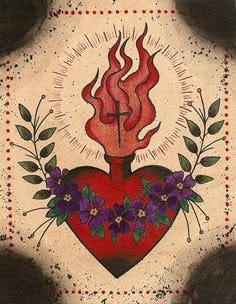
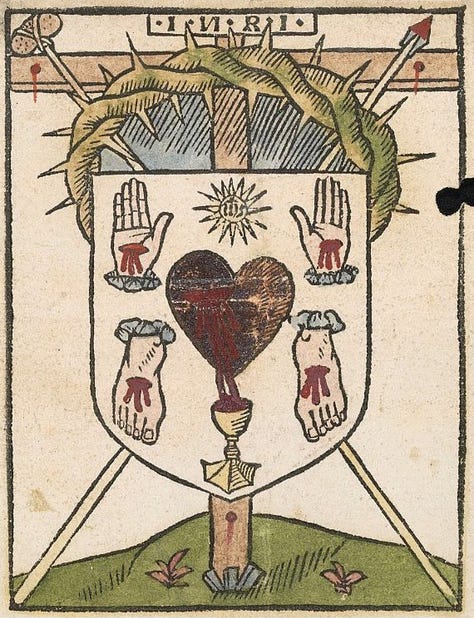
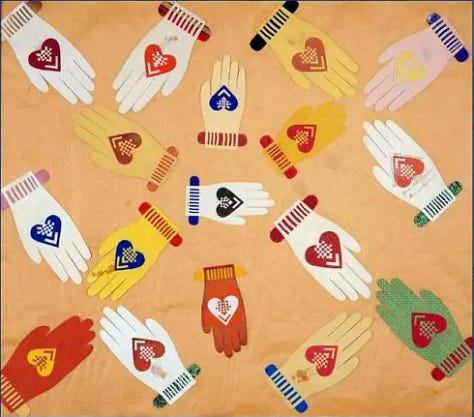
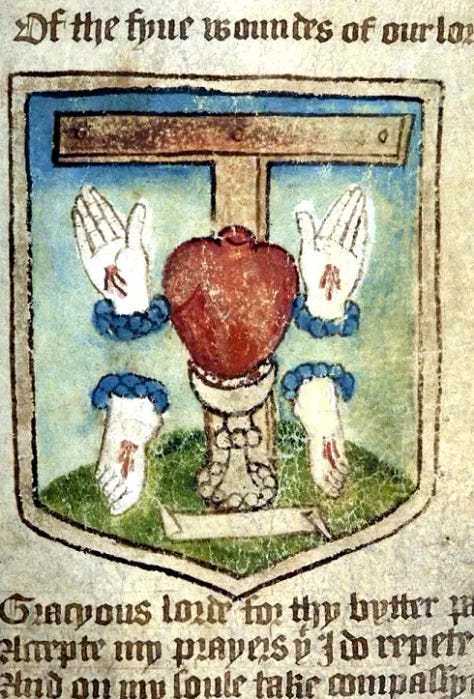
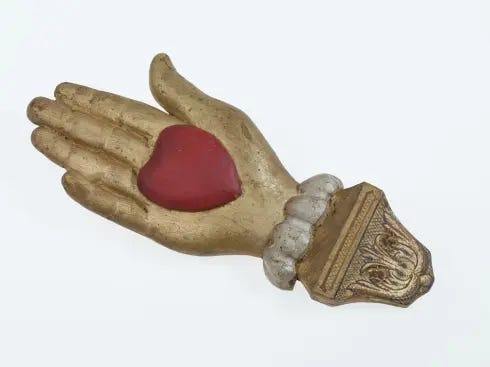
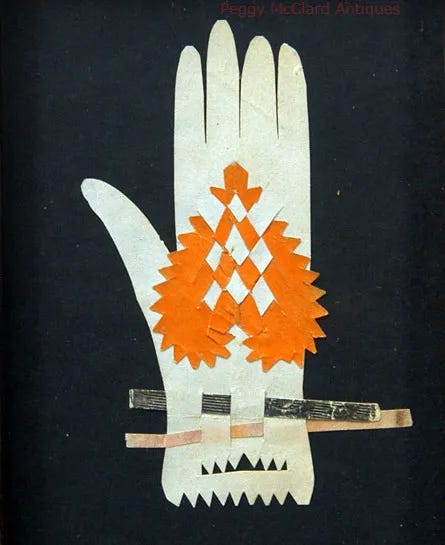
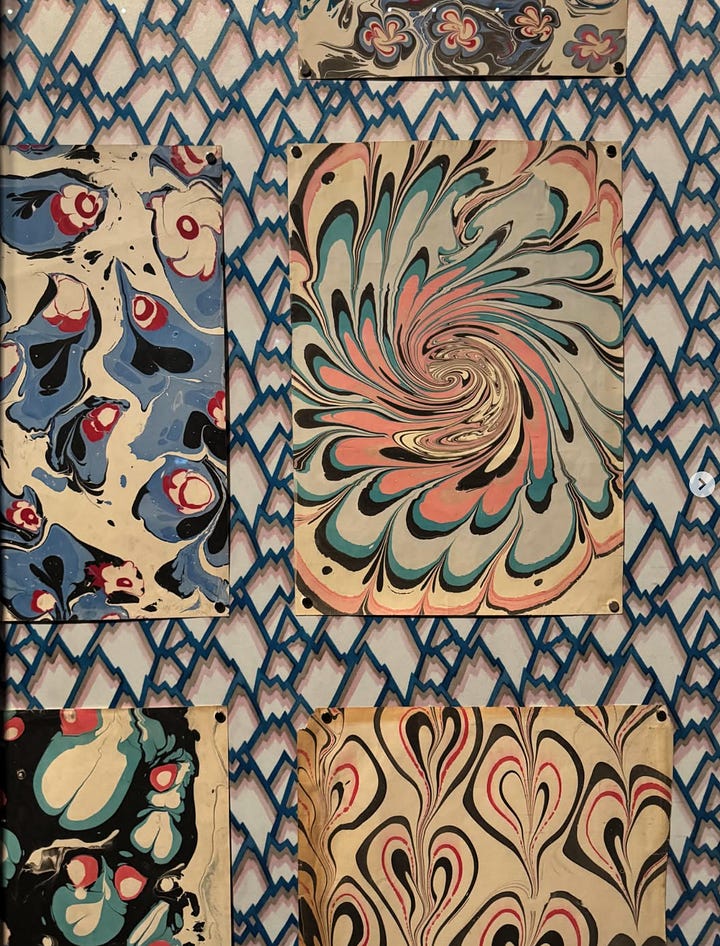
medieval and folk images of hearts:


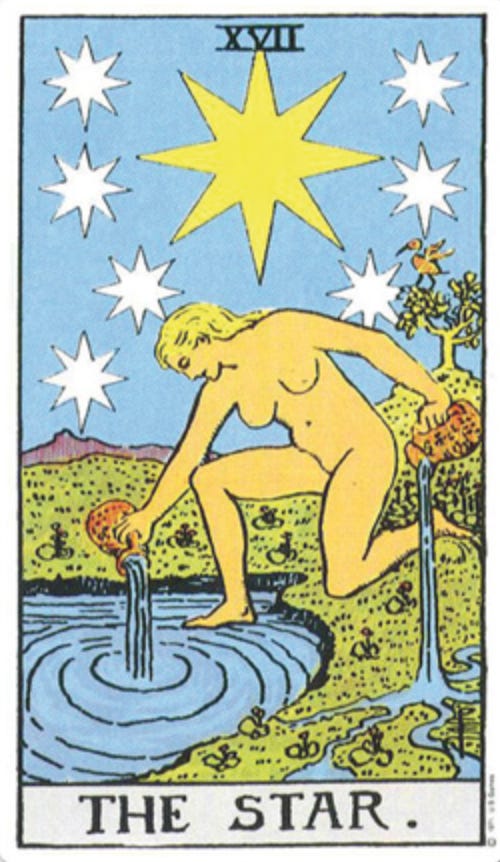
The Star tarot card:
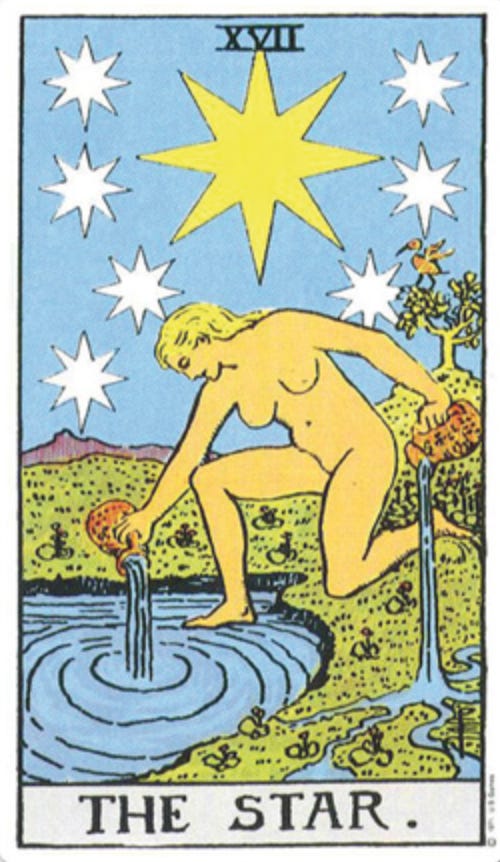
in almost every reading The Star signifies faith, renewal, and spiritual guidance. I feel it so big.
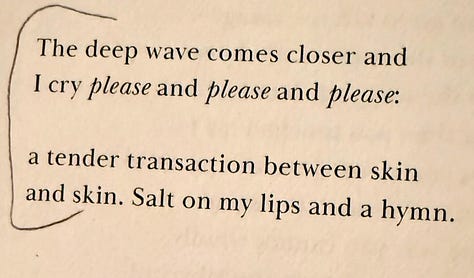
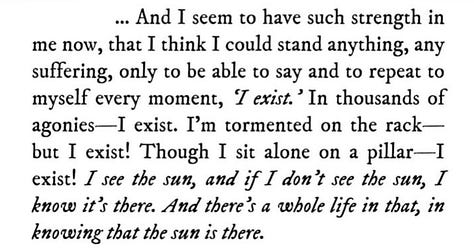
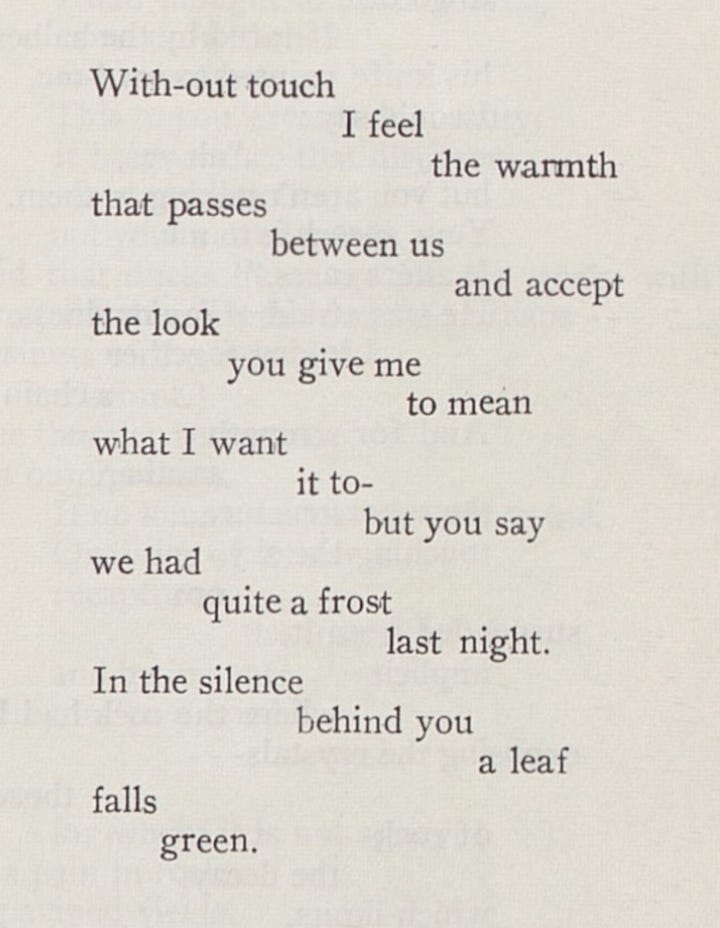
here are all the things I saved on social media in the past week:
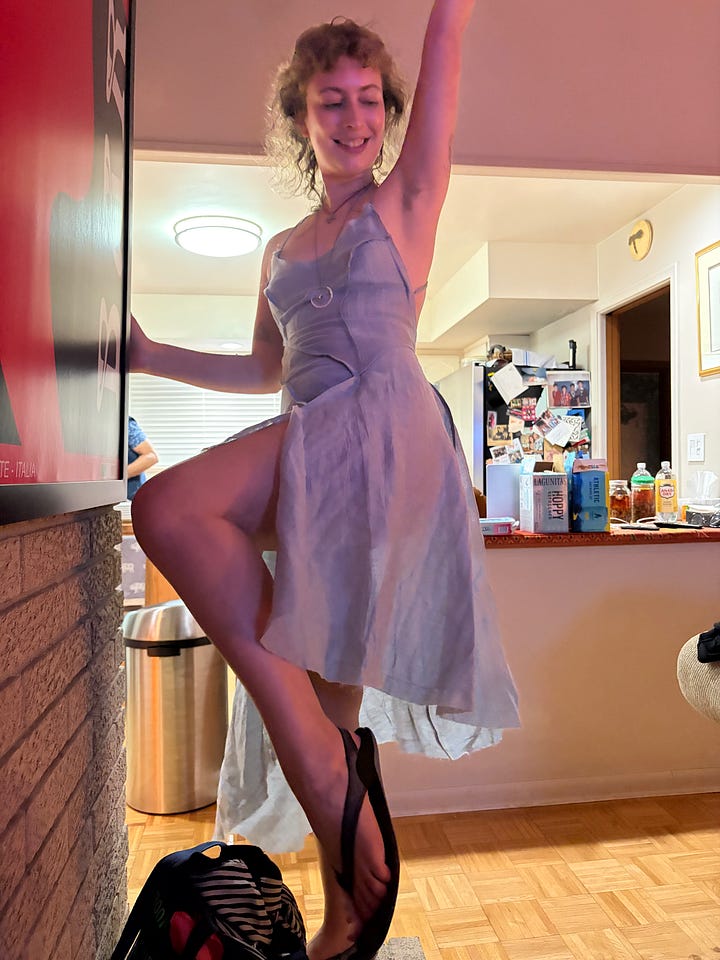
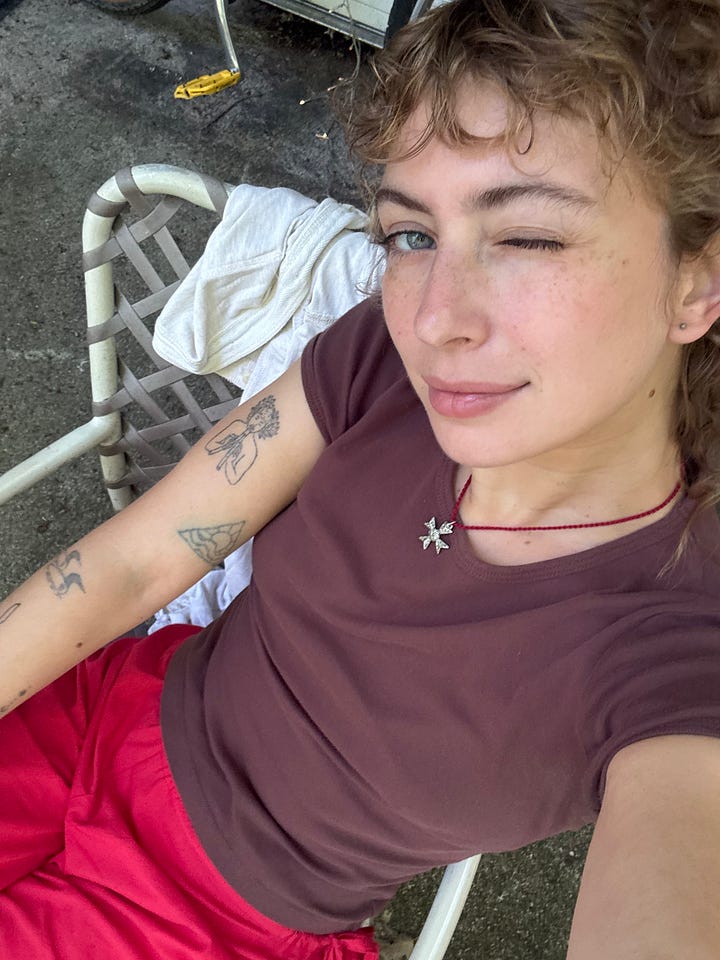
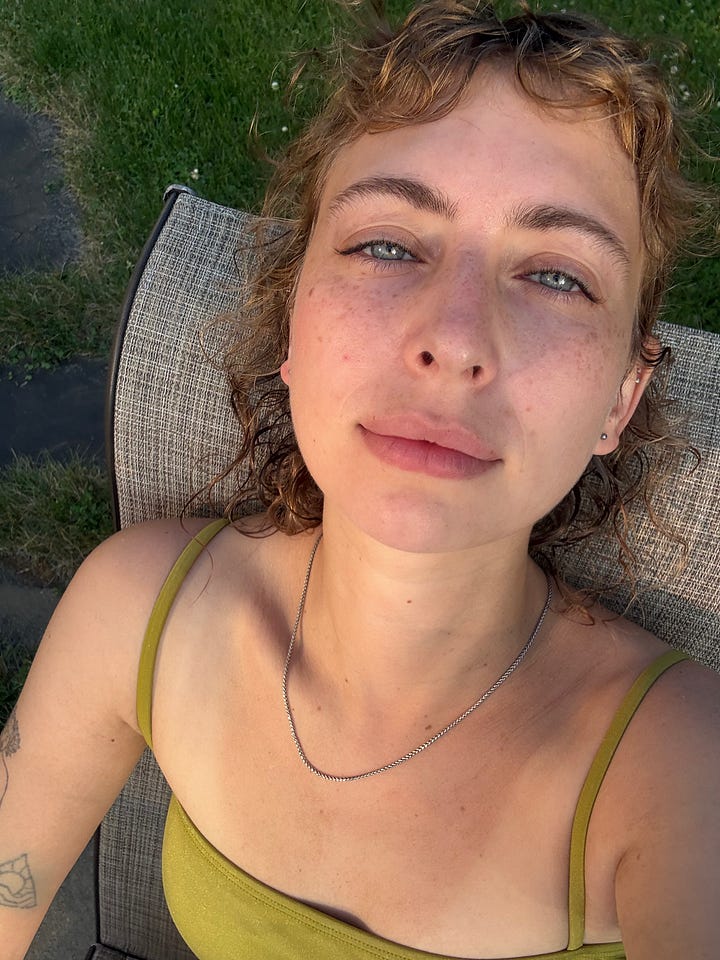
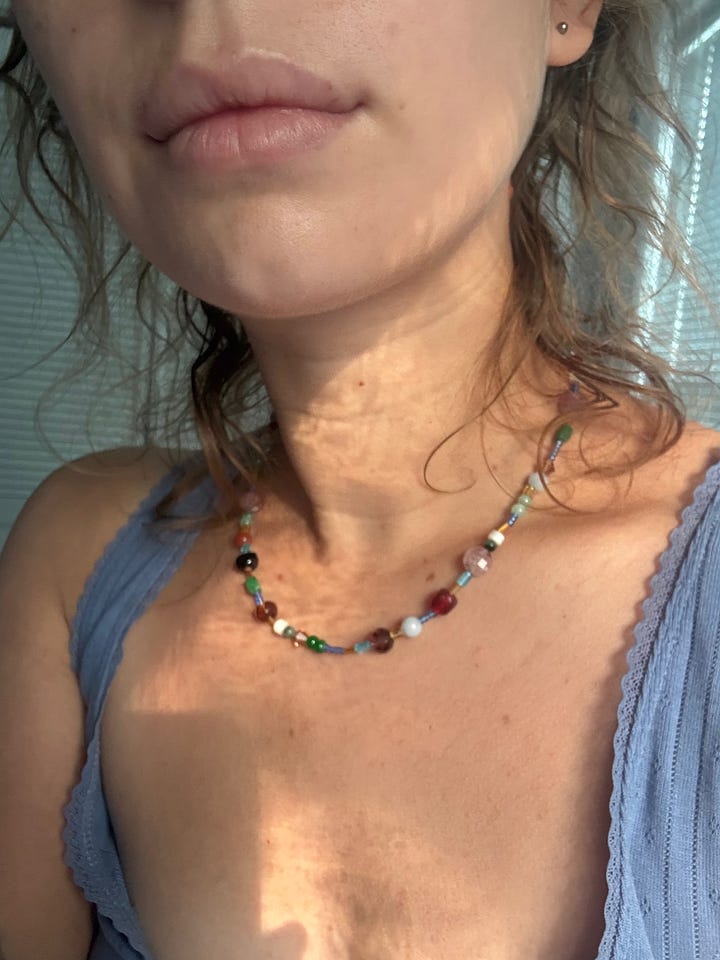
TALISMANS AROUND THE NECK. Marge made me a necklace that feels infused with her all-seeing-ness, and Cece made me a necklace with quartz that promotes clarity. When I wear it to sleep I have vivid (and hot) dreams. I also recently found my grandmother’s Maltese Cross (she is from Malta) after losing it for ages. I wore this all through high school and a lot of college and it got tucked away during one of my many moves. I got a red silk cord for it to wear around my neck because the ball chain it was on (which was sick) broke. The 8 points on the Maltese Cross represent the eight Beatitudes found in the Gospel of Matthew FYI, which I find cool. I also often wear a wheat chain (spiga in Italian), which is a specific kind of woven chain using four strands of oval and teardrop-shaped links together. Wheat, especially in Mediterranean cultures (which I am from), symbolizes abundance, prosperity, fertility, and renewal. I love how durable and sturdy it feels. I have 4 very funny photos of each of them - dancing at my birthday party with Cece’s on, a pic I sent Marge of a brown t shirt we were discussing where I have the cross on, salt- and sun-soaked at Anna’s pool with the wheat chain, and hazy morning light with Marge’s beads.




what I’ve been watching:
Neon Genesis Evangelion
I am not very far into it because I’ve been busy but I writhe around on my bed after every episode - what a profound exploration of human connection, humanity itself and why it’s worth saving(!!!???!!!) and like… how connection can save you from self loathing? How a sense purpose can pull you up from the depths of yourself? DEAR LORD.
The Odyssey
Marge and I saw this twice in imax in the span of two days and I’m just going to keep going back to the movies to see it while it’s still there. FUCK DUDE. It is not only magnificent, but it is like… the culmination of the entire history of humanity’s magnificence. I just feel so lucky to be alive at the same time as this was made, to be able to see it again and again and again. Watching a 3000 year old story, a story that is foundational to humanity and the entire existence of art, come to life before my eyes in a way that has never been done before… it’s perfect. Nolan somehow made it better than the original poem, I’m serious. Read that review I linked earlier to understand (in part) why. All of his choices and omissions and additions serve a version of the poem for this specific time in history. People might get mad about certain choices, but to me they were all incredibly correct. The Odyssey is part of an oral tradition. It was MADE to be adapted to its audience. Also… fuck… the razing of Troy just makes me think so much about the genocides happening right now, which I also think is his point. Like… we as humans have fully completely lost our way (this is a line in the movie: “we have lost our way”). To kill anyone, to kill entire populations, is so entirely soul-warping that we as a society will never be able to grapple with this. Truly we are at the end of the road here. I don’t even mean this in a doom and gloom way, it’s just true. We can’t save ourselves from ourselves (another line basically pulled from the film).
Okay I’m tapped out this is what I have in me. Each of these will always be different because my artistic inner world is always different. Just naming that. Love you if you’ve made it this far.
xo Lys
love u
You are not alone. All Fours changed something in me too!